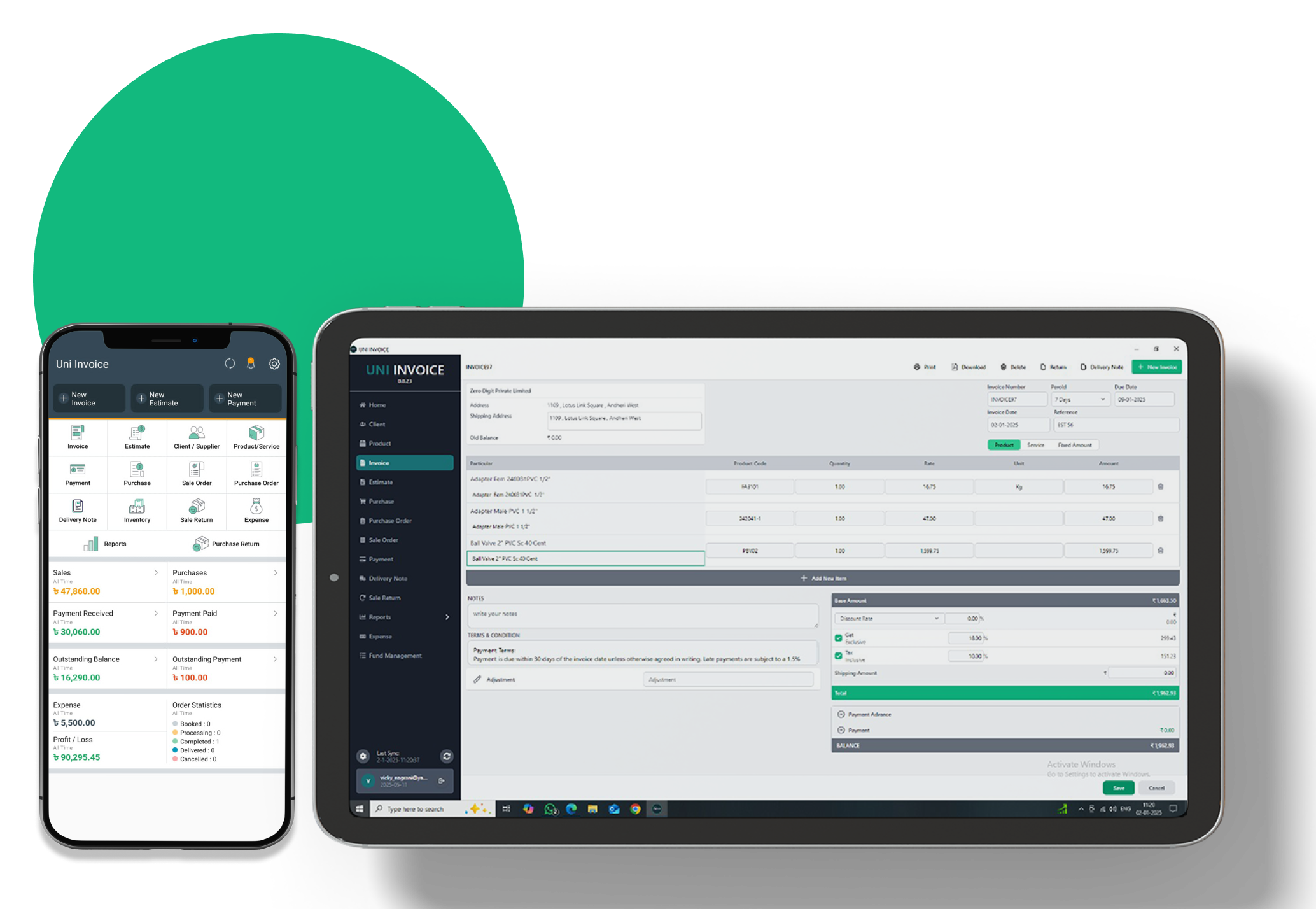
Bills vs Invoices: Understanding the Difference for Freelancers
By UniInvoice Team |
2025-09-19
Whether you're a freelancer, consultant, or independent contractor,
getting paid is a major part of running your business. But many
freelancers find themselves asking:
Is a bill the same as an invoice?
Although both request payment, they serve different purposes, especially
when it comes to timing, detail, and accounting.
This guide breaks down the
difference between a bill and an invoice, explains when
to use each, and provides best practices for freelancers to maintain a
smooth and professional payment process.
What Is an Invoice?
An invoice is a detailed document used to formally
request payment. Freelancers and contractors typically use invoices to
bill clients for completed work, deposits, or monthly services.
Common invoice elements include:
- Seller and client details
- Date and unique invoice number
- Service or product descriptions
- Hours, units, rates, and taxes
- Total amount owed
- Payment terms (Net 15, Net 30, etc.)
Invoices are ideal for professional services that require tracking,
documentation, and clear payment timelines.
What Is a Bill?
A bill also requests money from a buyer, but typically
requires immediate payment. Bills are most common in
point-of-sale environments such as cafés, salons, restaurants, and
retail stores.
Bills are simpler than invoices and often leave out tracking details
like invoice numbers or itemized breakdowns.
Invoice vs Bill: Main Differences
| Feature |
Invoice |
Bill |
| Purpose |
Formal payment request with details |
Quick request for immediate payment |
| Timing |
Payment due later (e.g., 15–30 days) |
Payment due immediately |
| Detail Level |
Highly detailed, itemized, numbered |
Minimal details, simple total |
| Best For |
Freelancers, contractors, B2B services |
Retail, restaurants, utilities, subscriptions |
When Should Freelancers Use an Invoice or Bill?
Most freelancers should use invoices because they
provide transparency, documentation, and structured payment timelines.
Use a bill when:
- You require payment on the spot
-
You run a service or product-based business with instant transactions
Use an invoice when:
- You handle long-term projects
- You bill by milestone or monthly
- Your work requires detailed breakdowns
- You need a record for taxes and accounting
How to Send a Professional Invoice
Most freelancers email a PDF invoice to their client. Avoid sending
editable files like Word documents.
Subject: Invoice for [Project Name]
Hi [Client Name],
Please find the invoice for [project] attached. The total due is
[Amount], payable by [Due Date].
Let me know if you have any questions.
Thank you,
[Your Name]
Final Thoughts
Bills and invoices both request payment, but they serve different
purposes. Understanding the difference helps freelancers stay organized,
maintain professionalism, and ensure timely payments.